
06/08/2024
The global fuel oil demand fluctuates between 230-250 million metric tons per year. The International Maritime Organization (IMO) has set an ambitious goal to achieve net-zero emissions by 2050, but is this target realistic? Currently, many new ships are still being delivered with conventional fuel engines, and numerous ship owners are installing scrubbers to burn high sulfur fuel.
This raises the question: what are the viable alternatives to bunker fuel oil and how are the barge owners anticipating?
Biofuel: FAME and Other Bio Streams Biofuels, particularly Fatty Acid Methyl Esters (FAME), and other bio streams have been blended into fuel oil since 2020. This blend has become increasingly attractive to bunker sellers, especially when suppliers can claim renewable energy certificates, making it more profitable. The logistical changes required are minimal as biofuels can be blended and shipped using existing terminals and barges. Additionally, biofuels have proven to blend well with residual fuel streams. However, despite these advantages, biofuels face significant supply limitations. Given the massive demand of 230-250 million metric tons per year, it is impossible to blend the entire supply with biofuel. The current production of biofuels is insufficient to meet such a high demand. Moreover, the production process and feedstock availability further constrain the scalability of biofuels.
LNG: Liquefied Natural Gas LNG has been used as bunker fuel for over five years, with an increasing number of dual-fuel ships being introduced. These ships offer the flexibility to switch between fuel oil and LNG, providing cleaner combustion and lower emissions. Specifically, LNG can reduce SOx emissions by nearly 100% and NOx emissions by up to 85% compared to conventional marine fuels. Additionally, there is a plentiful supply of LNG globally. However, LNG engines are relatively expensive and have longer lead times compared to conventional options. Infrastructure is another significant hurdle; there are limited LNG terminals capable of efficiently loading barges. For example, in the Amsterdam-Rotterdam-Antwerp (ARA) region, the GATE and Zeebrugge terminals offer limited possibilities compared to other fuels.
To make LNG a viable alternative, substantial investments are needed to develop a sustainable supply chain. Building the necessary loading facilities and terminals can take up to eight years, presenting a natural disadvantage compared to fuel oil and methanol. The Lead Time Challenge LNG barges typically have longer lead times due to the complexity of their design and the stringent safety and regulatory requirements they must meet. These barges need specialised tanks for cryogenic storage and advanced systems for handling LNG. The construction process involves meticulous planning and coordination with shipyards that possess the necessary expertise.
Forecasting Market Conditions
The LNG market can be volatile, influenced by factors such as global energy prices and regional demand fluctuations. Two years ago, high gas prices in the Netherlands deterred investments in LNG. Recently, however, the combination of high fuel oil prices and low LNG prices has spiked demand for LNG. Staying attuned to these market dynamics is crucial. Building for Future Demand Despite the longer lead times, planning for future demand is essential. With current trends showing increased interest in LNG due to its lower emissions and cost benefits, now could be an opportune moment to initiate the construction of LNG barges. As the global marine industry continues to shift towards cleaner fuels, having LNG barges in your fleet can provide a competitive edge. In contrast to traditional barges, LNG barge companies do not simply construct barges and anticipate future demand. This is because, unlike a regular bunker barges that can switch between products after undergoing cleaning (from DPP to CPP), LNG barges are depended on one single product. While this is not entirely accurate, it's important to note that LNG barges are also capable of transporting ammonia. However, the market for this particular application remains in a relatively early stage of development.
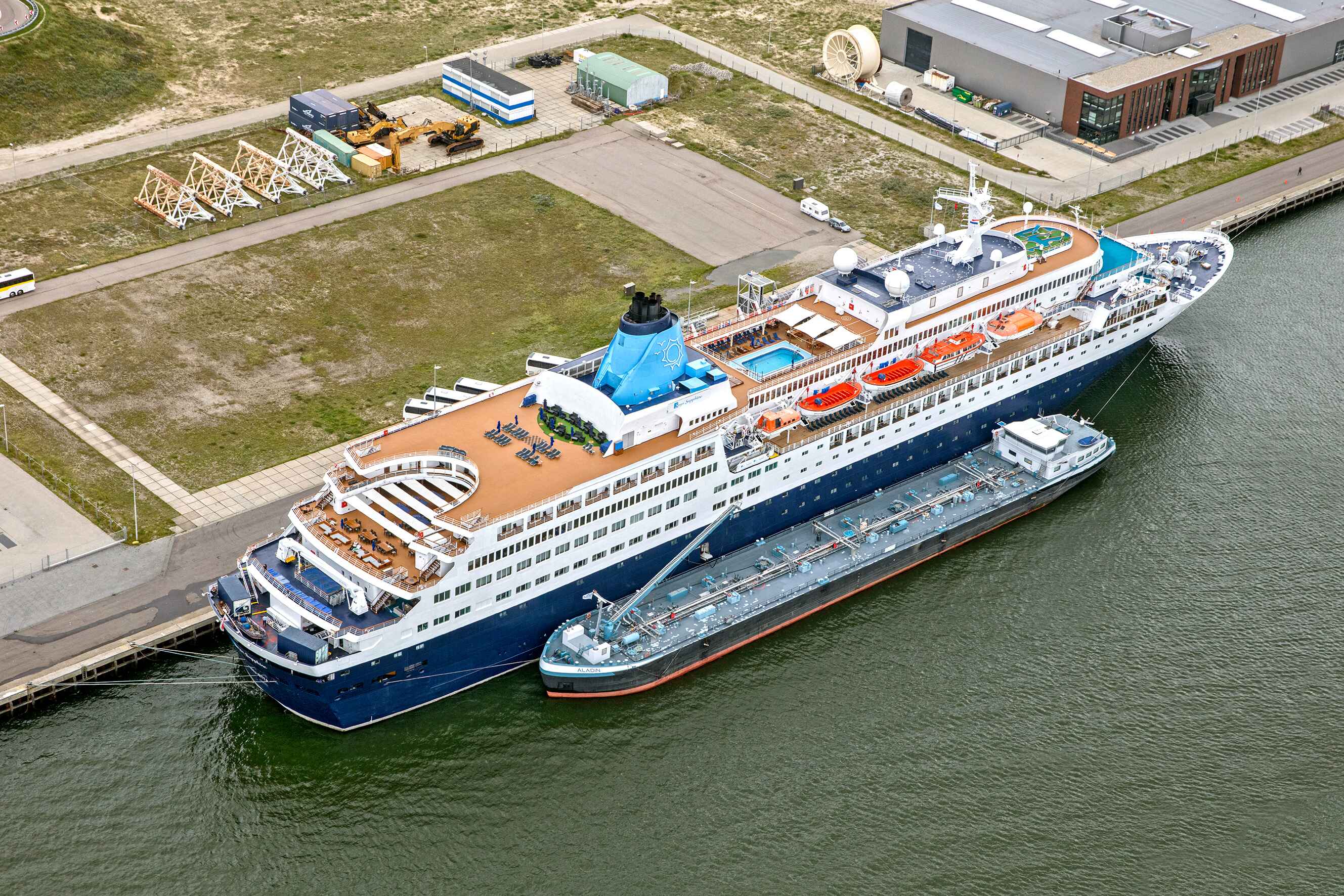
LNG barges lack the flexibility of carrying a wide range of products. Additionally, the construction costs of LNG barges are significantly higher. Given the current absence of a substantial spot market for LNG bunkers in the ARA region, it is deemed too risky to build an LNG barge without a prior agreement between the oil and barging company. These barges are only commissioned upon the request of a bunker supplier who must secure a long-term time charter (TC) to mitigate the risk for the barge company. Shipping company Victrol has build Europe’s first inland-waterway liquefied natural gas (LNG) bunker barge he LNG London in 2019 with a capacity of 3000m3, and the Energy Stockholm which will be delivered in 2024 and is Europe’s largest inland waterway LNG bunker barge being built to date with a capacity of 8000m3.
The density of LNG is approximately 0.45, which is considerably lower than that of conventional bunker fuels such as very low sulfur fuel oil (VLSFO), which has a density of around 0.97. This means that to deliver the same amount of bunkers, nearly double the number of LNG barge movements would be required compared to conventional bunker barges. To address this challenge, the use of very large LNG bunker barges could be considered. However, bunkering outside of port is not permitted, and using an LNG bunker coaster within the port may not be the most logistically feasible solution. Furthermore, the lower density of LNG also has implications for terminal storage. To store the same amount of bunkers, the required volume of LNG would be significantly greater than that of conventional bunker fuels. This would necessitate an increase in terminal storage capacity, which could pose additional challenges.
Methanol: A Promising Marine Fuel Methanol as a bunker fuel has gained traction in recent years. It is not yet widespread, but it shows promise due to the relative ease and cost-effectiveness of building methanol engines compared to LNG. Methanol is a safe, proven, and cost-competitive marine fuel that meets or exceeds current and planned emissions regulations. Methanol can reduce SOx and PM emissions by over 95% and NOx emissions by up to 80% compared to conventional marine fuels.
Methanol is available at more than 125 of the world’s largest ports, making it accessible for the shipping industry to comply with stricter air emissions regulations. As a liquid product, methanol is easy to transport, store, and bunker using standard safety procedures, similar to those for diesel. This reduces the cost of converting diesel engines to methanol dual-fuel vessels and the associated land-based infrastructure. One of the critical advantages of methanol is its higher volumetric energy content compared to alternative fuels like ammonia or hydrogen, making it suitable for various vessel types and longer voyages. While conventional methanol offers short-term emission reductions, green methanol, including biomethanol and e-methanol, can enable the industry to meet IMO’s long-term decarbonisation goals.
However, the availability and scalability of green methanol remain challenges. For now there is relatively small amount of ‘green methanol’ available in ARA which is already being used for other purposes. To meet de potential demand of green methanol, imports might be needed in ARA. But then the question arises if this is still a profitable alternative compared to other bunker products? Adding Methanol Barges to Your Fleet Methanol barges present another viable option with a shorter lead time and costs for construction compared to LNG barges.
Methanol is a promising alternative fuel due to its relative ease of storage and handling, lower construction costs, and compliance with emissions regulations. Including methanol barges in your fleet can provide flexibility and quicker adaptation to market changes, enhancing your ability to meet diverse fuel demands. Methanol bunkering operations have yet to commence in the ARA region, some tests were carried out but a there are still ongoing discussions how to proceed. As you need the supplier, barge company and the customer all to align. A barge used for bunkering methanol is preferably a coated barge, which brings extra costs ranging between 400-600k and the operating bunker company needs experience and a bunker license. The density of methanol is 0,79 which also means larger or more barges might be needed to bunker the requested volumes by the customers compared to vlsfo.
Given that this is an emerging market, it's likely that initial investments will be necessary to overcome startup hurdles. This is because the barges used for transporting methanol might not be as meticulously planned or optimised as the conventional bunker barges, which have high utilisation rates and can efficiently execute milk rounds (a continuous sequence of deliveries to multiple locations).
Ammonia: The Future Potential Anhydrous ammonia (NH3) has been identified as a potential long-term marine fuel that could offer near-zero carbon emissions. While there is limited marine experience with ammonia, the extensive land-based experience in the petrochemical and fertilizer industries provides a solid foundation for its use as a marine fuel. Ammonia has the advantage of being a zero-carbon fuel on a tank-to-wake basis. Moreover, ammonia can reduce NOx emissions by up to 90% compared to conventional marine fuels. However, ammonia does not directly produce SOx emissions, as it does not contain sulfur. However, ammonia poses significant toxicity challenges, adding complexity to ship designs and potentially limiting its suitability for various ship types. Ammonia may be more appropriate for deep-sea cargo ships rather than short-sea, passenger, or inland waterway craft. Additionally, the current production capacity, regulatory landscape, and fuel storage options present substantial challenges for adopting ammonia as a marine fuel.
Dual-Fuel Engines
Strategic Flexibility for Ship Owners Deep see ship owners with dual-fuel engines have a valuable advantage: the ability to choose the cheapest available fuel at their port calls. This flexibility can be particularly beneficial given the fluctuating prices of marine fuels. In 2021 and 2022, LNG was prohibitively expensive due to high gas prices in Europe. However, by the end of 2023, gas prices began to decline while fuel oil prices rose, leading to a surge in LNG demand. This illustrates the importance of having dual-fuel engines, as they allow ship owners to capitalise on such market shifts. Methanol pricing has also seen fluctuations. In 2023, methanol prices in various regions showed diverse trends.
For instance, prices in North America were relatively high due to strong demand from downstream sectors, while in Europe, prices stabilised after initial increases due to cheap imports from China. Asia experienced declining prices due to an oversupply and weak domestic demand. This dynamic pricing environment emphasises the strategic advantage of dual-fuel engines. Ship owners can opt for LNG when prices are low, as seen in recent months, or switch to methanol or traditional fuels when those become more cost-effective. This flexibility not only helps in reducing operational costs but also ensures compliance with stringent environmental regulations.
As a barge owner, the decision to build LNG or methanol barges should consider these market dynamics. While LNG barges have longer lead times and higher initial costs, they offer significant benefits in terms of lower emissions and cost savings when LNG prices are favourable. Methanol barges, on the other hand, can be built more quickly and at a lower cost, providing an immediate solution to meet growing demand for cleaner marine fuels. Investing in dual-fuel capabilities and diversifying your fleet with both LNG and methanol barges can provide a competitive edge in the ever-evolving marine fuel market. This approach ensures readiness to adapt to market changes and capitalise on fuel price variations, ultimately contributing to a more sustainable and profitable maritime industry.
Conclusion
While the transition to alternative marine fuels is essential for meeting global emission reduction goals, the current picture suggests that LNG and methanol, even in the best-case scenario, may only be able to account for 40-50 million metric tons of the 230-250 million metric ton globally annual demand. This means that relying solely on these fuels will not be sufficient to achieve the IMO’s net-zero target by 2050. Biofuels offer a relatively easy integration with existing infrastructure but face significant supply limitations. LNG provides cleaner combustion and is available globally, but requires substantial investments in infrastructure and has long lead times for engine production. Methanol is a cost-effective and accessible alternative, with substantial emission reduction potential, yet its scalability, particularly for green methanol, remains a challenge.
Features
Users
Company
Resources

SpotBarge
© 2026 by Spotbarge B.V. All rights reserved.