
21/11/2024
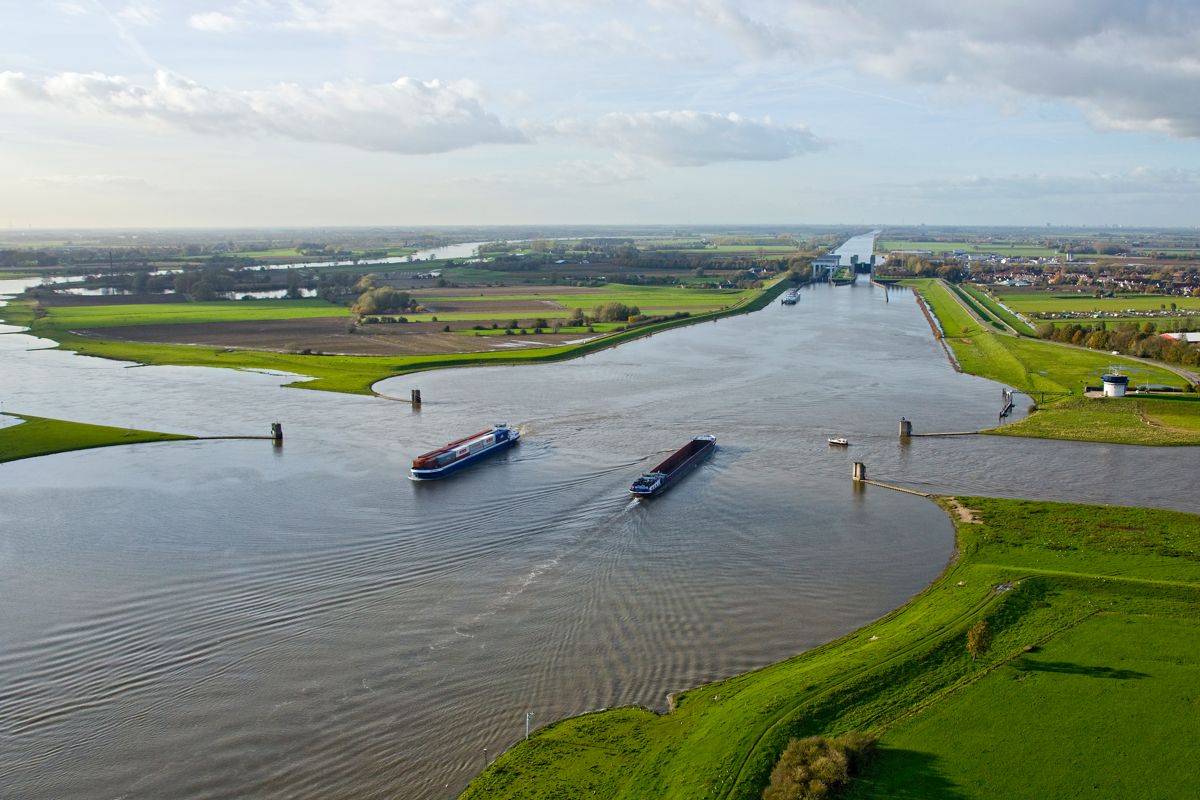
Work is underway on France’s Seine-Nord Europe Canal (SNEC), a major new European trading route that promises to boost the bloc’s economic fortunes.
When it is completed in 2030, the massive 107km infrastructure project will significantly increase the capacity for cheaper, faster and less polluting river trade between France, Belgium, and the Netherlands.
This wide-gauge canal of 107 kilometers long and 54 meters wide is an essential link in the Seine-Escaut river link, which will connect the French network to the European waterways.
A wide-gauge canal, the Seine-Nord Europe Canal will be able to accommodate barges measuring up to 185 meters long et 11,40 meters wide. A small revolution in the sector, while the current Canal du Nord, which is much narrower, today represents a real bottleneck.
It is estimated, a few years after its commissioning, that the Seine-Nord Europe Canal will make it possible to transport around 17 million tons of goods per year and to reduce road traffic by 1 million heavy goods vehicles in France, and even by 2,3 million across Europe on the Seine-Escaut link. The result is a carbon footprint that demonstrates, over 40 years, a savings of more than 50 million tonnes of CO2.
Terminals and refineries in Northern France
Le Havre
Most of the oil is refined in Le Havre, which accounts for about one third of the France oil refining capacity. ExxonMobil refines 240.000 b/p and Total Energies 247.000 b/p. Le Havre Port and the two refineries are connected to the river Seine, which passes Rouen and Paris.
In Le Havre, there are three terminals:
-Chain Le Havre Terminal – 170 tanks with a capacity of 421,000 m3
-Societe Havraise de Manutention de Produits Petroliers – 20 tanks with a capacity of 386,800 m3.
-Societe d'Entreposage de Produits Petroliers – a capacity of 16,000 m3.
Rouen
In Rouen a large terminal of Tepsa with 145 tanks and 778,000m3 of storage is located which is also connected to the pipeline between Le Havre and Paris and located along the Seine. Another terminal in Rouen is Seatank with a capacity of 110,000m3 storing petroleum products and vegoil. Also, Bollore is operating a terminal of 600,000 m3 with 43 tanks.
Paris
Three storage terminals are located in the Paris area, in Mitry-Mory 19,190 m³ is for gasoline and 70,192 m³ is for distillates. Grigny 35,382 m³ is for gasoline, 79,635 m³ is for distillates. Nanterre 10,700 m³ is for gasoline and 104,300 m³ is for distillates. All are connected to the pipeline coming from Le Havre - Rouen for the delivery of gasoline and distillates. Two of them accessible via barge transport.
Pipelines
Pipelines carrying finished products form two extensive networks starting from Le Havre: the Le Havre-Paris (LHP) network and the ODC network (NATO Pipelines in France, mainly for kerosene supply). These are both operated by Trapil which is owned by Total, Pisto SAS, Esso, Shell and BP.
Are there any opportunities?
The SNEC canal is being built in an area where no terminals are currently located. Therefore, oil companies could assess whether it makes sense, under current conditions, to transport a barge from FARAG to the Paris area, or even to the Rouen / Le Havre area.
For Le Havre or Rouen, using a coaster or a handy-sized vessel may be more cost-effective considering the price per ton ($p/t). However when smaller volumes need to be imported or exported from one of the refineries in Le Havre they now have an option to calculate the price difference between a barge and a coaster.
Since the Northern France area is primarily dominated by oil majors the new canal could offer trading houses an opportunity to compete, provided that storage facilities are available for product supply and, of course, if it proves to be profitable.
However, this could also present an opportunity for the oil companies and terminal operators located in Le Havre, Paris and Rouen, which are connected to the pipeline. If new terminals were constructed along the SNEC route, they could be supplied by the Paris and Rouen terminals by barge. From there, trucks could utilise these new terminals as distribution points, allowing them to travel shorter distances. As the SNEC route is located near the A1 autoroute, also known as the Autoroute du Nord (the Northern Motorway), the busiest of France’ s highways.
Ports
Four inland ports of Noyon, Nesle, Péronne and Marquion-Cambrai, developed by the Hauts-de-France Region and the Intercommunalities, will be the gateway to the Canal for companies in a vast surrounding territory where they will benefit from port services. Together they include 330 hectares of terminals and business parts.
Low water
To guarantee navigation on the Seine-Nord Europe Canal at all times of the year, a reserve of 14 million m3 will be built in the Louette valley, in Allaines. The Louette water reserve will thus be able to meet the water needs of the Canal, fully supplied by the Oise in normal times, during periods of low water.
Business developers
Business developers and analysts working for trading & supply teams in oil companies could assess whether building or renting a (to built) terminal along the new route would be impactful. They have to asses the competition in the area, potential cost savings, costs like barge movements and the use of storage facilities. And which products would be interesting to ship to these areas.
Supplying fuel stations from new terminals could potentially save numerous truck trips, reducing both CO2 emissions and overall costs.
Building storage terminals along the new route
Securing financial backing for new storage facilities requires strategic foresight and the assurance of multi-year commitments. In the vibrant ARA region, speculative new-build capacity is catalysing a surge in chemical storage developments. This is driven by the promising outlook and the superior environmental profile of the chemicals industry compared to traditional road fuels, highlighting a transformative shift in energy preferences. Consequently, support for new road fuel storage projects is scant, with multi-year contracts now a requisite for these ventures to achieve financial viability.
Constructing new tanks below 10,000 cubic meters—fully equipped with firefighting systems, heating, and essential capabilities—requires an investment of approximately 500-600 euros per cubic meter. This estimation, however, does not encompass the costs associated with quays infrastructure, loading arms, weigh bridges, or piping, which are critical components for complete operational readiness.
Market dynamics will be the decisive factor in determining the appetite and timeline for developing new infrastructure along the canal. While expediting engineering processes is feasible, navigating the complexities of securing permits in France remains a formidable challenge.
Nonetheless, there are proactive storage operators whom already secured a plot along the canal, positioning themselves strategically for future growth. For those seeking detailed insights and opportunities, we invite you to connect withStorage Linq. Our expertise and comprehensive resources are at your disposal to guide you through this evolving landscape.
Sailing time / cost of use barge
The primary barge types suitable for this new route are 85 and 110-meter barges, not limited by length but by width restrictions of 11.40 meters. (the website of canal due north states a max beam of 11.40m while the locks are allowing 11.50m so we assume barges with a beam of 11.45m will be able to pass trough). Consequently, the maximum carrying capacity to these areas is approximately 2,500 tons for standard 2,500t/3,000m³ barges. Additionally, 110 x 11.50m barges with increased cubic capacity (3,500m³) can carry more cargo, but with a draft of 3.50 meters, their load is limited to around 2,750 tons.
Upon completion of the canal, the sailing time from the Westerschelde to Paris will be approximately 2 days or 30 to 35 hours. To reach Rouen, an additional 6 hours will be required, and for Le Havre, an extra 10 hours on top of the 30 to 35 hours. Given a current estimated time charter (tc) rate of €4,500 per day for these barge types, a round trip can be estimated at around €25,000 (incl loading/discharge), plus or minus. The spot price will be determined by prevailing market conditions.
New business?
Oil companies are reluctant to address this question, as doing so might inadvertently reveal their strategic advantages. Moreover, they may be constrained by compliance regulations that prohibit such disclosures. The initiative to explore this new route and capitalise on its benefits would likely depend on the forward-thinking and proactive nature of some of the oil companies, with the first mover potentially gaining a competitive edge.
Features
Users
Company
Resources

SpotBarge
© 2026 by Spotbarge B.V. All rights reserved.