
06/08/2024
Over the past few years, the majority of European nations have been governed by left or center-left parties, resulting in the implementation of the Green Deal. This ambitious pact aims to make Europe the world's first climate-neutral continent by 2050, an initiative that seems commendable. However, as a consequence, Europe will be increasingly dependent on other global powers, particularly China and the United States.
Is it wise to rely on other nations for the import of essential products, such as plastics, which are critical components in medical and technical equipment? Moreover, is it wise to create an unfavourable economic environment for refineries in Europe, leading to their dismantling? The war in Ukraine, among others, has already demonstrated the heavy dependence of countries on energy. The COVID-19 pandemic has further highlighted the importance of manufacturing sites and in-house knowledge for sustaining the economy.
It appears that the European economy is not as safeguarded and promoted as its Chinese or American counterparts. In light of the recent elections in which many European countries voted for right-wing parties, one must ask: can anything still be done to address these concerns?
Sir Jim Ratcliffe the Founder of INEOS stated in January 2024 "This is the last chance to stop Europe from sleepwalking into off-shoring its industry, jobs investments and emissions." Petrochemicals billionaire says he would have passed on $4bn Belgium investment in INEOS ONE if he had known of regulatory hurdles. He wrote a letter to Euro President von der Leyen, Sir Jim said:
Other signals
ExxonMobil has cautioned that it may withhold billions of dollars in climate-related investments in Europe unless Brussels reduces environmental regulations, which the company claims are responsible for the "deindustrialization of the European economy," according to a report by the Financial Times. Exxon had earmarked $20 billion for decarbonisation projects between 2022 and 2027, the newspaper reported, citing an interview with Karen McKee, president of the company's product solutions division. McKee told the Financial Times that Exxon was likely to prioritise "other parts of the world" due to increasing frustration at the regulatory burden linked to getting projects off the ground in Europe. European governments are fearful that they cannot compete with the financial muscle of US President Joe Biden’s Inflation Reduction Act, which provides $369 billion in green subsidies aimed at boosting the rollout of clean energy technologies, or the low-cost, high-demand Chinese market. (Reuters)
Europe and China lead way with high-risk sites
Europe and China house the greatest number of high-risk sites, putting about 3.9 million barrels per day (bpd) of refining capacity in jeopardy, Wood Mackenzie found, based on its estimate of net cash margins, cost of carbon emissions, ownership, environmental investment and strategic value of refineries. There are 11 European sites that account for 45 per cent of all high-risk plants, the report found. About 30 European refineries have already shut down since 2009, data from industry body Concawe shows, with nearly 90 still in operation.
Majors moving out
The stringent regulations, fluctuating political landscapes, and slim profit margins are prompting industry leaders to divest their shares in numerous jointly-owned refineries, and to either shut down or repurpose facilities.
Chemicals
Europe's chemical industry enters 2024 in one of the deepest crises it has ever faced. Competition from Asia combined with weak demand caused chemical prices to drop while production costs have never been this high.
SABIC naphtha cracker will not restart In May 2024 SABIC has undertaken a 3-month turnaround at the Chemelot site, the olefins 3 naphtha cracker will not restart thereafter which produces chemicals such as ethylene and propylene. According to industry estimates, the ethylene capacities of the Olefins 3 and 4 crackers are 550,000 tpy and 675,000 tpy, respectively.
BASF’s external investment Germany’s BASF slashed another 1 billion euros ($1.1 billion) in annual costs at its Ludwigshafen headquarters, citing weak demand and high energy costs in its home market, highlighting the country's economic troubles (2023). The annual cost savings will be reached by the end of 2026, affecting both production and administrative activities at its largest chemical complex. Chemical giant BASF has been a pillar of German business for more than 150 years, For over 150 years, chemical giant BASF has been a cornerstone of German industry, driving innovation and contributing to the country's rise as a global industrial powerhouse. The company's products and technologies have helped make "Made in Germany" a symbol of quality and excellence around the world. However, BASF's latest major investment, a $10 billion state-of-the-art complex touted as the gold standard for sustainable production, is not being built in Germany. Instead, the company has chosen to construct the facility in China. This decision has raised concerns about the competitiveness of Germany's industrial sector and the country's ability to attract major investments in cutting-edge technologies. It also highlights the growing importance of China as a global hub for innovation and sustainable manufacturing.
Biodiesel
Competition with Asia Biodiesel oversupply has been exacerbated by a surge in Chinese biodiesel exports to the European Union. The alleged dumping of biodiesel mixed with cheaper feedstocks and mislabeling has created an environment where European producers struggle to compete.
How does this effect inland barging?
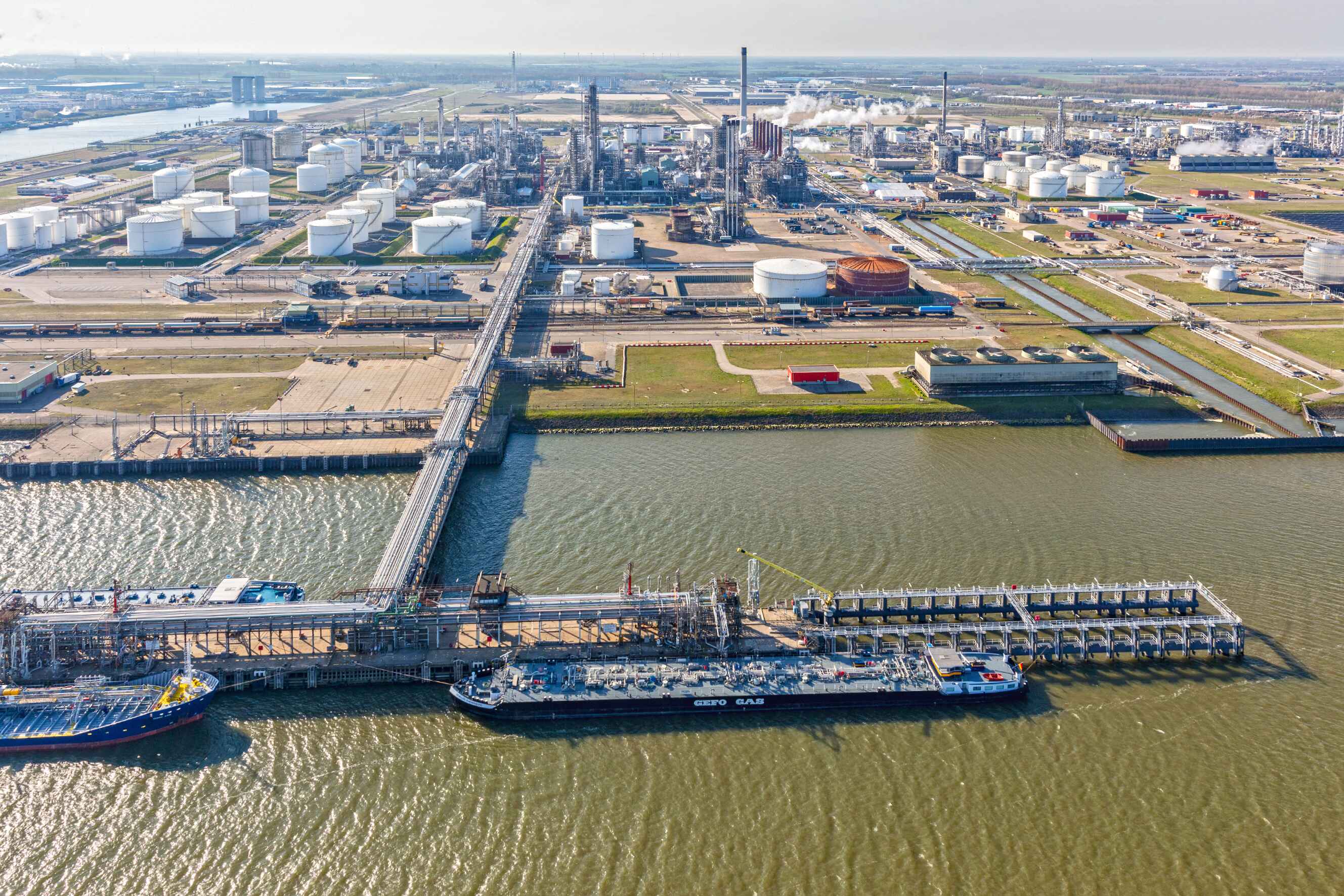
Depot supplies for gasoil, gasoline and diesel in The Netherlands, Belgium, Germany, France and Switzerland will continue by barge as the demand will be there for the time being. The closure of Shell Wesseling and reducing capacity of BP Gelschenkirchen will mean more product will be exported from the ARA region, meaning higher freight cost and longer sailing times. But feedstocks which once needed for these refineries or movements blend components will not longer be required.
The client base for barge brokers is expanding beyond just the major players in the market. In the past, only large companies were active in the market, but now trading houses, retailers, and even small trading firms with as few as 10 employees are utilising barges for transportation. For example, at the Miro Karlsruhe terminal, a new trading house has recently joined, and there is potential for another one to come on board in the near future.
The halt of several bio plants does mean a significant decrease in volume, as it could have led to an increased trading activity. Same goes for a decrease in refineries, leading to potential less blend activities and trades in the ARA region. Time charters might become less interesting as charterers can not optimise their fleet anymore with less loading or discharge facilities, instead they might choose for COA’s and spot for certain routes as the brokers can optimise the fleet better. It remains to be seen whether the newly elected governments will have the ability to revise the existing plans and bring about positive changes in the industry landscape.
Features
Users
Company
Resources

SpotBarge
© 2026 by Spotbarge B.V. All rights reserved.